
Chromebooks are about to get a lot smarter, and more accessible
Google recently announced that Gemini will soon replace Google Assistant everywhere, from your phone and smartwatches to smart home speakers. ChromeOS
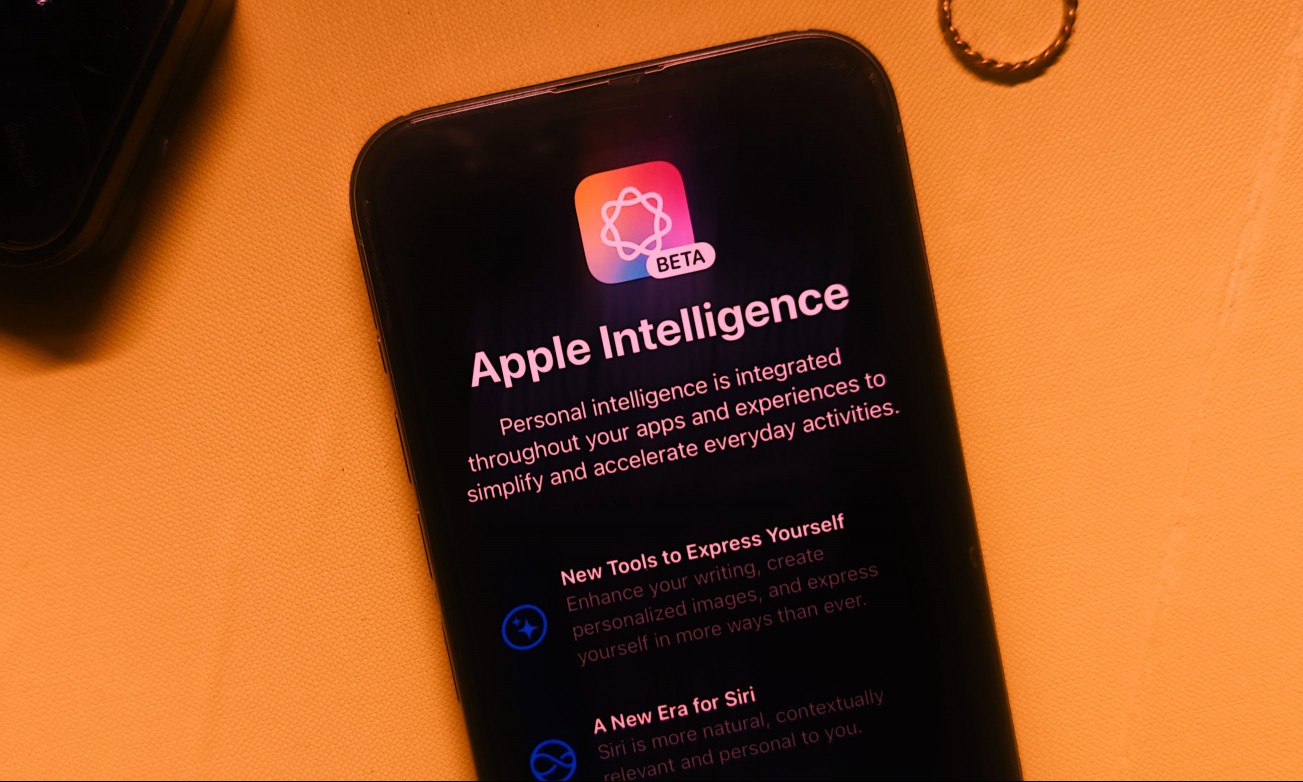
It’s no secret that Apple’s AI efforts, especially on the iPhone, haven’t quite managed to create a stir, neither in terms of capabilities, nor the pace of innovation. The company, however, has finally managed a breakthrough in one of its biggest markets, which is also the central part of its product manufacturing operations.
Earlier today, Reuters reported that Apple has picked Chinese giant Alibaba to lead its AI efforts in the country. So far, iPhone and Mac users in China haven’t been able to take advantage of the Apple Intelligence tech stack. That’s due to the regulatory norms in China, which mandate a local partner to offer such services.
So far, Apple hasn’t been able to pick a partner for offering generative capabilities aboard its phones and computing devices. For the rest of the world, Apple Intelligence arrived months ago, featuring the company’s own work with generative AI tools and some extra help from OpenAI’s GPT stack.
The deal with Alibaba is a crucial development for multiple reasons, as the company races to recover its slumping market share and stay competitive in the face of local rivals, including a resurgent Huawei. Apple was previously rumored to be in talks with other names such as Tencent and Baidu for serving AI features in China.
“Apple has been very selective. They talked to a number of companies in China, and in the end they choose to do business with us. They want to use our AI to power their phones,” Joseph Tasi, chairperson of Alibaba Group, was quoted as saying by Bloomberg.

There is no word whether Alibaba will remain Apple’s sole AI development partner for the Chinese market. Elsewhere, despite its deal with OpenAI, Apple is reportedly open to the idea of bringing Google’s Gemini and Anthropic’s Claude to the Apple Intelligence ecosystem.
Alibaba is no small fish in the AI pond. Merely a couple of weeks ago, the company released its Qwen 2.5 AI model. The company said it not only outpaces the buzzy new AI agent that is DeepSeek, but also the recent models from Silicon Valley AI titans like OpenAI and Meta.
“Qwen 2.5-Max outperforms almost across the board GPT-4o, DeepSeek-V3 and Llama-3.1-405B,” the company claimed in an official statement, as per Reuters. According to Hugging Face, Qwen powers the world’s top ten open-source large language models (LLMs).
AI is a huge deal in China, especially in the context of smartphone innovation. “Mainland China’s AI-capable smartphone market experienced a remarkable 591% year-on-year growth in devices shipped in Q3 2024,” says a Canalys report.

Every major smartphone player in China — including Xiaomi, Huawei, Vivo, and Oppo — now offers on-device as well as cloud-based implementation of AI features. The idea is not too different from how you experience on-device Gemini Nano on Google Pixel phones and the Galaxy AI stack on Samsung devices such as the Galaxy S25 Ultra.
Speedy progress with optimizing these on-device AI models, reduction in costs, and improved performance have played a key role in democratizing AI smartphone features in China. In fact, the players are adopting closed as well as open-source ecosystems, which further picks up the pace for innovation.
The best example of China’s rapid progress in the AI field is DeepSeek, which sent the US-based AI companies into a frenzy and wiped billions of dollars from the stock market in one go. Of course, it was also quickly adopted by smartphone makers such as Honor.

At the same time, a robust policy framework and focus on privacy have only encouraged local smartphone brands to embrace AI in China. Apple is following a similar approach to Apple Intelligence. But its deal with Alibaba could be beneficial for Apple customers across the world.
Thanks to their quick adoption of AI, Chinese smartphone labels have been able to build AI-driven experiences at a rapid pace. From fun media editing to productivity tools for calls and connected computing, the progress has been quite impressive to witness.
Apple’s deal with Alibaba could very well offer a template for quicker AI feature development. Once that wheel starts spinning, the company would simply have to load those tricks atop the AI models it is already using with Apple Intelligence for the rest of the world.
Google recently announced that Gemini will soon replace Google Assistant everywhere, from your phone and smartwatches to smart home speakers. ChromeOS

Anthropic has thrown its hat in the race to establish an AI-based web search feature, which it announced on Thursday.The feature is based on Anthropic

xAI launched its Grok-3 AI chatbot merely a few days ago, but locked it behind a paywall worth $40 per month. Now, the company is offering free access
OpenAI has just introduced its latest AI model, dubbed GPT-4.5, which the company claims is its largest and best model yet. This is not a reasoning mo

Meta wants a piece of the pie — a big piece — when it comes to generative AI. As part of its long-term strategy to embed itself in every part of our l
An AI expert has accused OpenAI of rewriting its history and being overly dismissive of safety concerns.Former OpenAI policy researcher Miles Brundage

Image used with permission by copyright holderWhile the AI world remains fixated on how China’s DeepSeek is turning the American AI industry on its ea
SOPA Images / Getty ImagesMeta announced on Tuesday that it is launching a new developers conference in April, dubbed “Llamacon,” that will focus on “
We are a comprehensive and trusted information platform dedicated to delivering high-quality content across a wide range of topics, including society, technology, business, health, culture, and entertainment.
From breaking news to in-depth reports, we adhere to the principles of accuracy and diverse perspectives, helping readers find clarity and reliability in today’s fast-paced information landscape.
Our goal is to be a dependable source of knowledge for every reader—making information not only accessible but truly trustworthy. Looking ahead, we will continue to enhance our content and services, connecting the world and delivering value.